


Aquila Path Technology
Understanding more from every biopsy
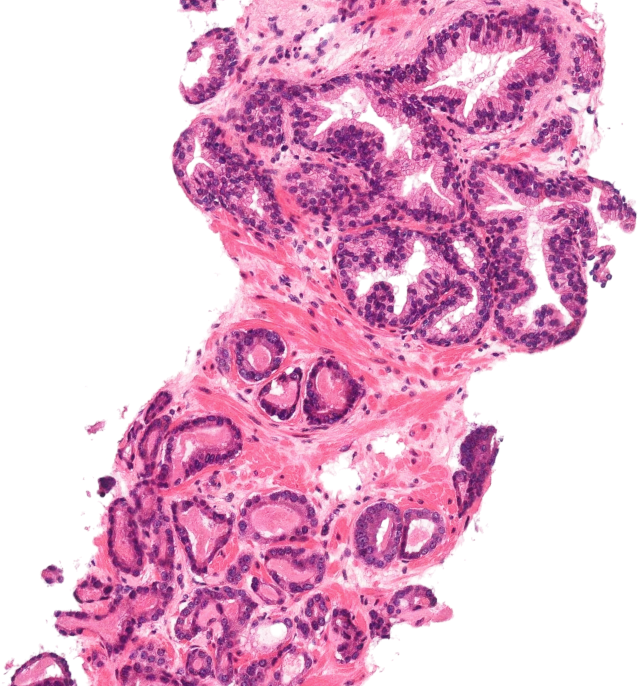
The Aquila Path Foundation Model interprets digitized prostate H&E alongside relevant clinical context. APFM powers TruGrade™, an objective biological risk assessment designed to complement conventional pathology and support physician-led interpretation.
The Aquila Path Foundation Model
A foundation model built around prostate pathology
Developed specifically for prostate pathology, the Aquila Path Foundation Model - APFM analyzes patterns within routine tissue and connects them to relevant clinical evidence. The resulting tissue intelligence forms the foundation of the TruGrade™ biological risk assessment.
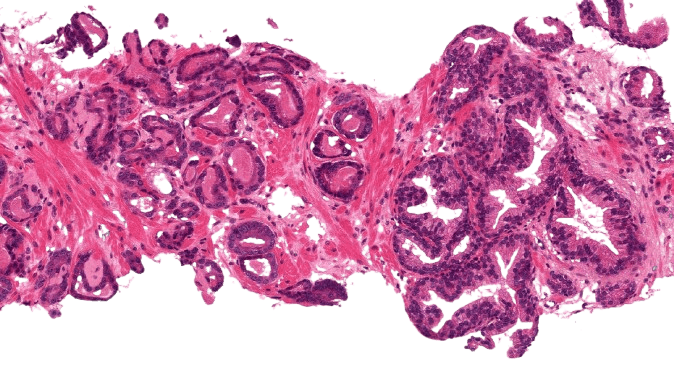
Routine digitized pathology provides the biological foundation.

Aquila Path
Foundation Model
Multimodal tissue and clinical intelligence.
Selected patient information can add clinically relevant perspective.
01
Foundation-Scale Learning
Learns broad tissue representations from prostate pathology and associated clinical evidence.
02
Multimodal Context
Interprets complementary categories of evidence together rather than viewing tissue and clinical context in isolation.
03
One Interpretable Output
Translates multidimensional information into a biological risk assessment intended to complement conventional pathology.
The TruGrade™ Score
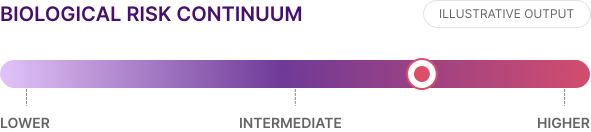
One score. Greater biological context.
TruGrade™ brings multidimensional tissue evidence and relevant clinical context into a single interpretable assessment of biological risk. Presented along a continuous scale, it is designed to complement conventional pathology and support physician-led evaluation.
Technology Principles
Built on biology. Grounded in outcomes.
APFM is developed around the biological and clinical purpose of the assessment with a focused approach to prostate tissue intelligence.

Biology First
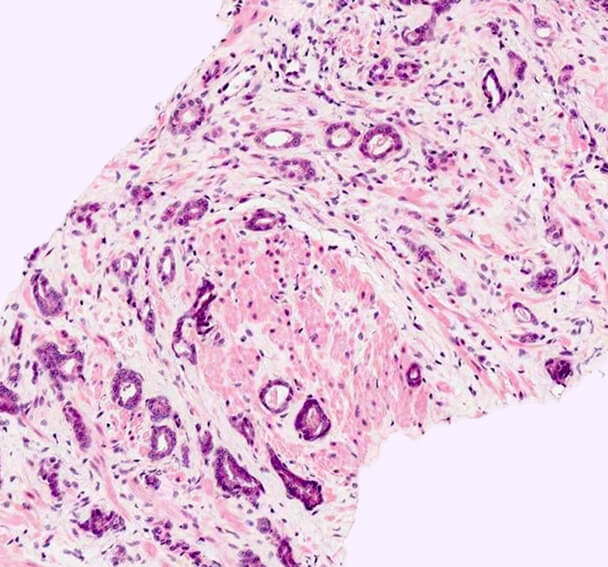
Centered on clinically meaningful tissue morphology, gland architecture, spatial relationships, and prostate disease biology.

Quantitative by Design
Computational analysis supports a structured and more consistent interpretation of tissue evidence across patient cases.

Outcome Grounded
The Aquila Path Foundation Model is formed by longitudinal clinical evidence and relevant endpoints that indicate how the disease may progress overtime.

Built for Discovery
Designed to support research into emerging biological relationships and potential tissue-based biomarkers within prostate pathology.
PURPOSE BUILT FOCUS
Designed for prostate tissue intelligence
APFM is developed specifically around prostate biopsy tissue, disease biology and the clinical context relevant to biological-risk interpretation.
- Specimen context preserved
- Patient context considered
- Physician-led interpretation
Clinical Workflow
Designed for practical clinical integration
A clear three-stage path from digitized routine pathology to an interpretable TruGrade™ report with implementation tailored to the laboratory and clinical environment.